Skip to content

Photo and 3D model

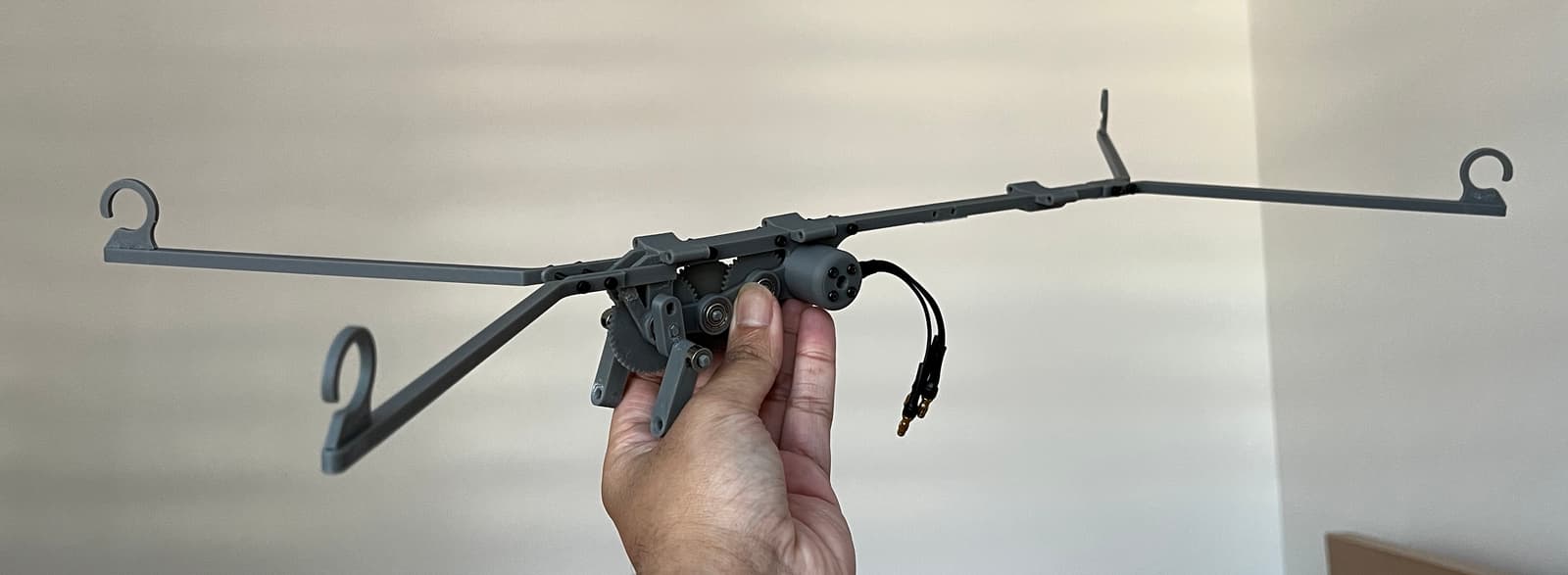
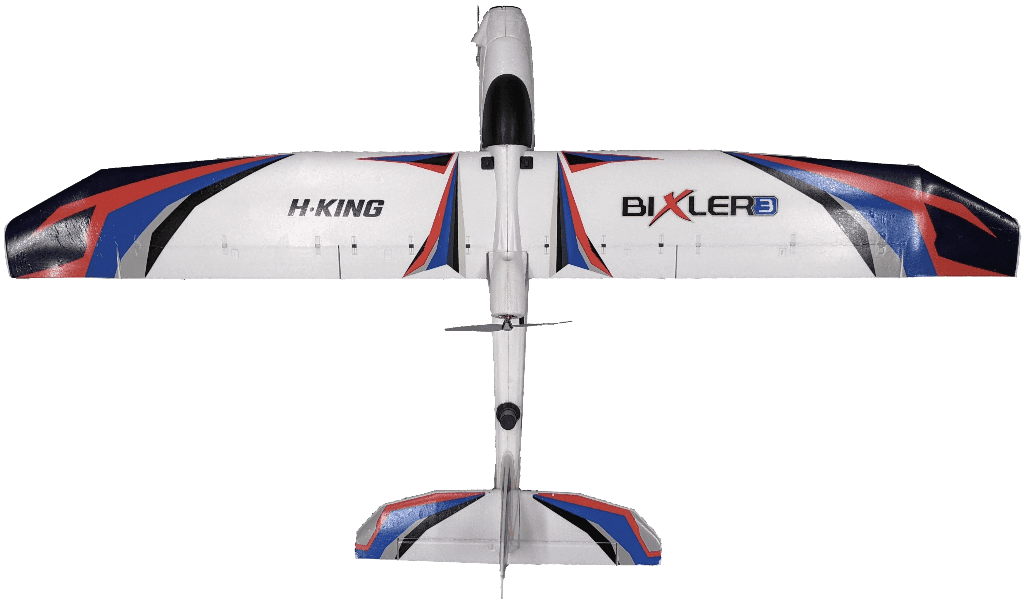
LIS Vision Flight, photo from its repository
Photo@lis-epfl (opens in a new tab)MITsource file (opens in a new tab)

3D preview converted from github.com/lis-epfl/lis-vision-flight at 8710a7c, under MIT. View the original files from GitHub (1.3 MB) (opens in a new tab)

Open source · free files

LIS Vision Flight

Drone

An open-source, simple fixed-wing drone for vision-based flight experiments.

Project information

Buildability
63/100Buildable with some effort
Estimated cost
Not stated
Level
Advanced
Parts
Not listed
Licenses
MIT (opens in a new tab), hardware and software
Commercial use
Allowed
Works with
ROS 2

This repository contains executable files that Robotheca doesn't check. Only run them if you trust the creator.

Which files (1 script)

Suggested by Robotheca, created by @lis-epfl (opens in a new tab), from github.com/lis-epfl/lis-vision-flight (opens in a new tab), pinned to commit 8710a7c (opens in a new tab). You buy the parts yourself; Robotheca doesn't sell robots.

What to buy

This repository has no parts list Robotheca can read yet.

Why it scores 63

It measures the published files, not the robot · How we score

63/100

Buildable with some effort

How complete the published files are for rebuilding this robot, measured by Robotheca at commit 8710a7c. It isn't a rating of the robot. Counted out of 80 points and scaled to 100: the parts that don't apply to this robot are left out.

  1. 13D and CAD files10 printable parts (STL, 3MF), 14 CAD source files.20/20
  2. –Robot descriptionNo URDF. Not counted: the score is made of the parts that apply.Optional: add a URDF, and the robot can be seen in 3D and tried in the browser.Not counted
  3. 2Parts listNo parts list in the repository or linked.Most points to gain: Link to your parts list, or add it to the repository (a CSV or a Markdown table) with quantities, prices and where to buy each part.0/20
  4. 3SoftwareCode in this repository, instructions to install or run it, built on ros2.15/15
  5. 4DocumentationREADME of 1,243 characters with 1 picture; 0 build steps.Write a README of at least 1,500 characters: what the robot does and how to build it. Split the build into at least 3 steps.5/15
  6. –SimulationNo simulation files. Not counted: the score is made of the parts that apply.Optional: add a simulation model (MuJoCo, Gazebo, Webots or Isaac).Not counted
  7. 5LicensesHardware: MIT; software: MIT.10/10

Build it

The guide appears here as you scroll.

Guide by @lis-epfl (README.md), under MIT.

More guides

Wiring and electronics

Notes written by Robotheca from the project's documents

Main parts

  • Global shutter Flir Firefly S camera with Arducam lens
  • Nvidia Jetson Nano single board computer on a custom carrier board
  • Pixhawk 4 PX4 autopilot
  • PX4Flow optical flow sensor and point lidar
  • Sensirion SDP33 differential pressure airspeed sensor
  • Drotek GNSS module and antenna for RTK
  • Telemetry radio transceiver
  • FrSky RC receiver
  • Corona servos for ailerons, elevator and rudder
  • Scorpion brushless thrust motor with electronic speed controller
  • Power module board powering servos and I2C sensors from a 3S LiPo battery
  • I2C multiplexer board

Connections

  • Camera trigger wire connects to pin 5 or 6 of the FMU PWM OUT port, with ground shared with PX4
  • RC receiver connects to ports 1, 2 and 5 of the DSM/SBUS connector
  • Servos connect to the I/O PWM OUT port: MAIN1 and MAIN2 ailerons, MAIN3 elevator, MAIN4 throttle, MAIN5 rudder
  • I2C multiplexer board connects to the I2C A port, with the flow sensor, pressure sensor and lidar on it
  • Battery connects to the GND and B+ connector of the power board, which connects to the Pixhawk 4 POWER port
  • VCC lines are disconnected so servos and I2C sensors are powered from the power board instead of the Pixhawk 4
  • GPS ROVER connector goes to CAP and ADC IN on the Pixhawk 4
  • Telemetry module connects to TELEM1 on the Pixhawk 4
  • Jetson Nano UART connector connects to TELEM2 on the Pixhawk 4
  • Carrier board can power directly from a 2S to 4S LiPo battery

What it can do

Written by Robotheca from the project's documents
  • Vision-based fixed-wing flight experiments with a global shutter camera and onboard processing
  • Onboard single board computer processes vision data and handles control
  • Flow sensor and point lidar support vision-based pose estimation
  • High precision RTK GNSS provides ground truth data
  • Airspeed sensor estimates wind speeds
  • Telemetry radio communicates with a ground station
  • PX4 autopilot handles sensor reading, actuator commands, state estimation, time-synced camera triggering, attitude control and RTK correction communication
  • Camera can be triggered from the PX4 autopilot

Software

Framework
ROS 2
Languages
Python, Shell
License
MIT

Robotheca doesn't review code. Read it before running it.

How to run it

Written by Robotheca from the project's documents.

  1. 1Install ROS melodic and clone the repository with its submodules
  2. 2Install ROS dependencies for Whycon and the lis-vision-flight-ros package with rosdep
  3. 3Build the workspace with catkin_make and source the setup file
  4. 4Install the Python dependencies from the requirements file
  5. 5Load PX4 firmware version 1.10.1 and the parameter file through QGroundControl
  6. 6Edit the SD card file /etc/extras.txt on the autopilot to set sensor ports and MAVLink streaming rates
  7. 7Install the Spinnaker SDK and the flir_camera_driver for the Flir camera, optionally calibrate with Kalibr
  8. 8Launch the full system with roslaunch lis-vision-flight run.launch
  9. 9For the Jetson carrier board, install JetPack 4.4 with SDK Manager, build the kernel with the provided device tree files, create a default user and flash the Nano module

Software that runs on this robot

No software from Robotheca's catalogue found in this robot's files yet. Links come from its robot.yaml, its dependency files read as text, or Robotheca's editors.

The code

Free files

Every file of the project, at commit 8710a7c.

Community

Questions and improvements go to the creator's repository.

Add a badge to your README

For the creator: two badges that link back here. The second always shows this page's current label and score.

Listed on RobothecaRobotheca buildability

Markdown (one click selects it)

[![Listed on Robotheca](https://robotheca.org/robots/lis-vision-flight/badge.svg)](https://robotheca.org/robots/lis-vision-flight)
[![Robotheca buildability](https://robotheca.org/robots/lis-vision-flight/score.svg)](https://robotheca.org/robots/lis-vision-flight)

Other drones

All 51 drones
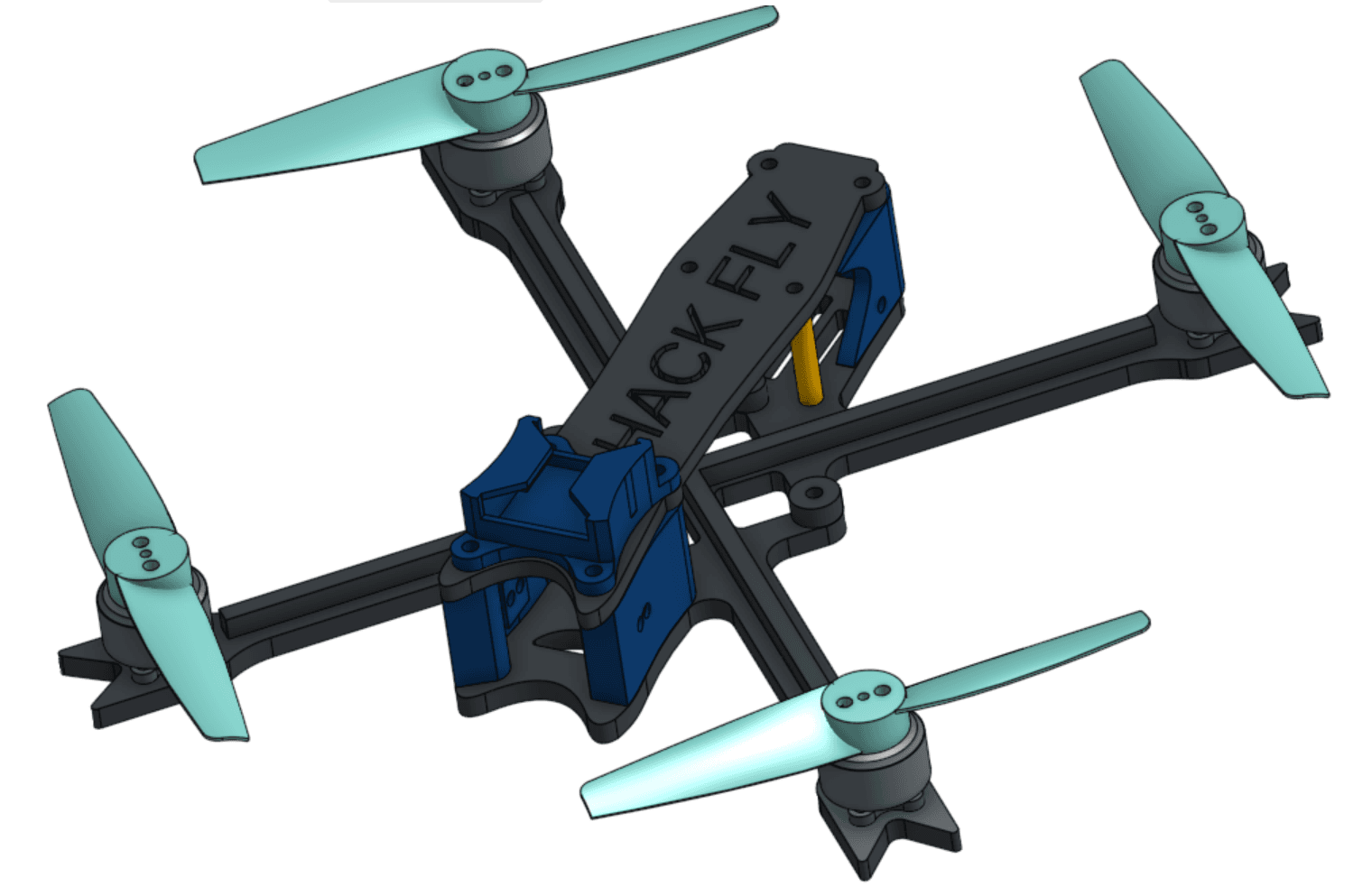
  • 3D render
    Ready to build

    Open source · free files

    HACK FLY 32

    Drone · Advanced

    Score
    Buildability 86 out of 100
    Cost
    $105≈ €94without the battery, the FPV camera and the radio you fly it with
  • Ready to build

    Open source · free files

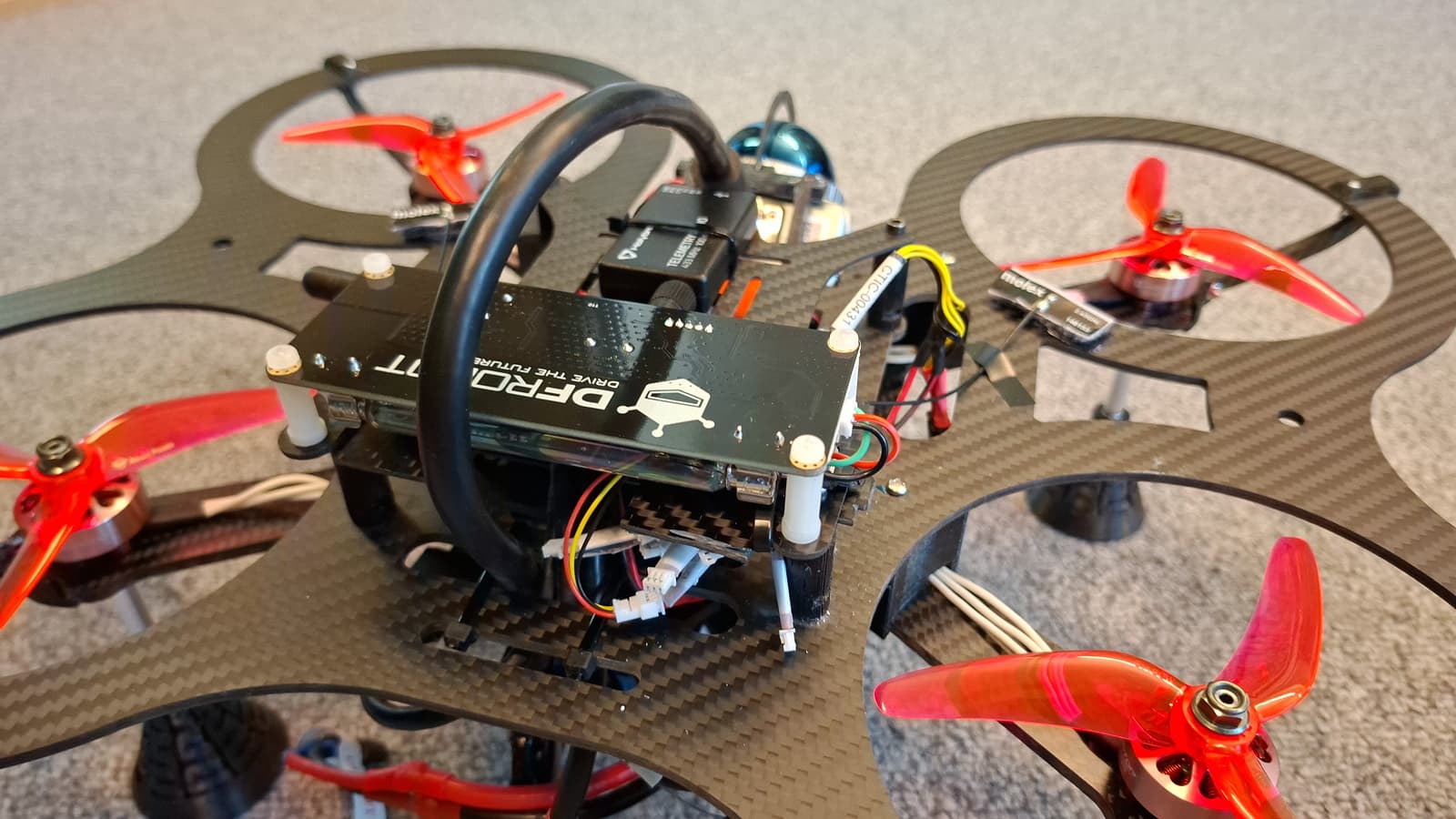
    R.O.B.I.N. Ornithopter

    Drone · Advanced

    Score
    Buildability 81 out of 100
    Cost
    £206≈ €247
  • Open source · free files

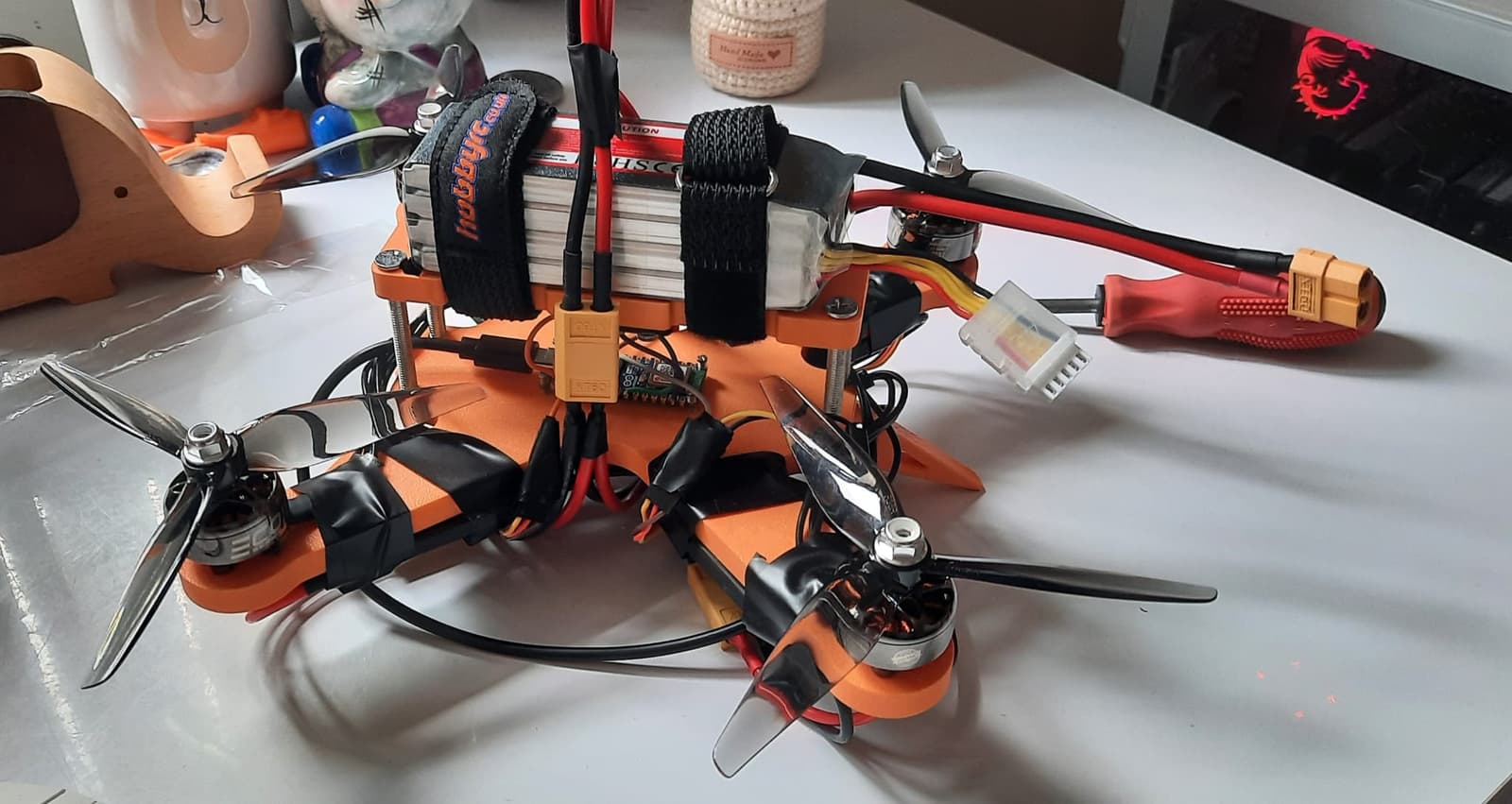
    Agipix Quadrotor

    Drone · Advanced

    Score
    Buildability 82 out of 100
    Cost
    Not stated

≈ € values are approximate, converted at the ECB euro reference rate of 30 Oct 2026. The creator's original price always comes first.