TipTap
A 3D-printed bipedal robot built as a low-cost desktop platform for semi-direct drive walking research.
- Other
- Open source
- 3D printable
Suggested by Robotheca, created by @DarrenLevine (opens in a new tab), from github.com/DarrenLevine/TipTap (opens in a new tab). Pinned to commit cffe367 (opens in a new tab).
- Hardware license
- MIT (opens in a new tab)
- Software license
- MIT (opens in a new tab)
- Commercial use
- Allowed
Photo and 3D model
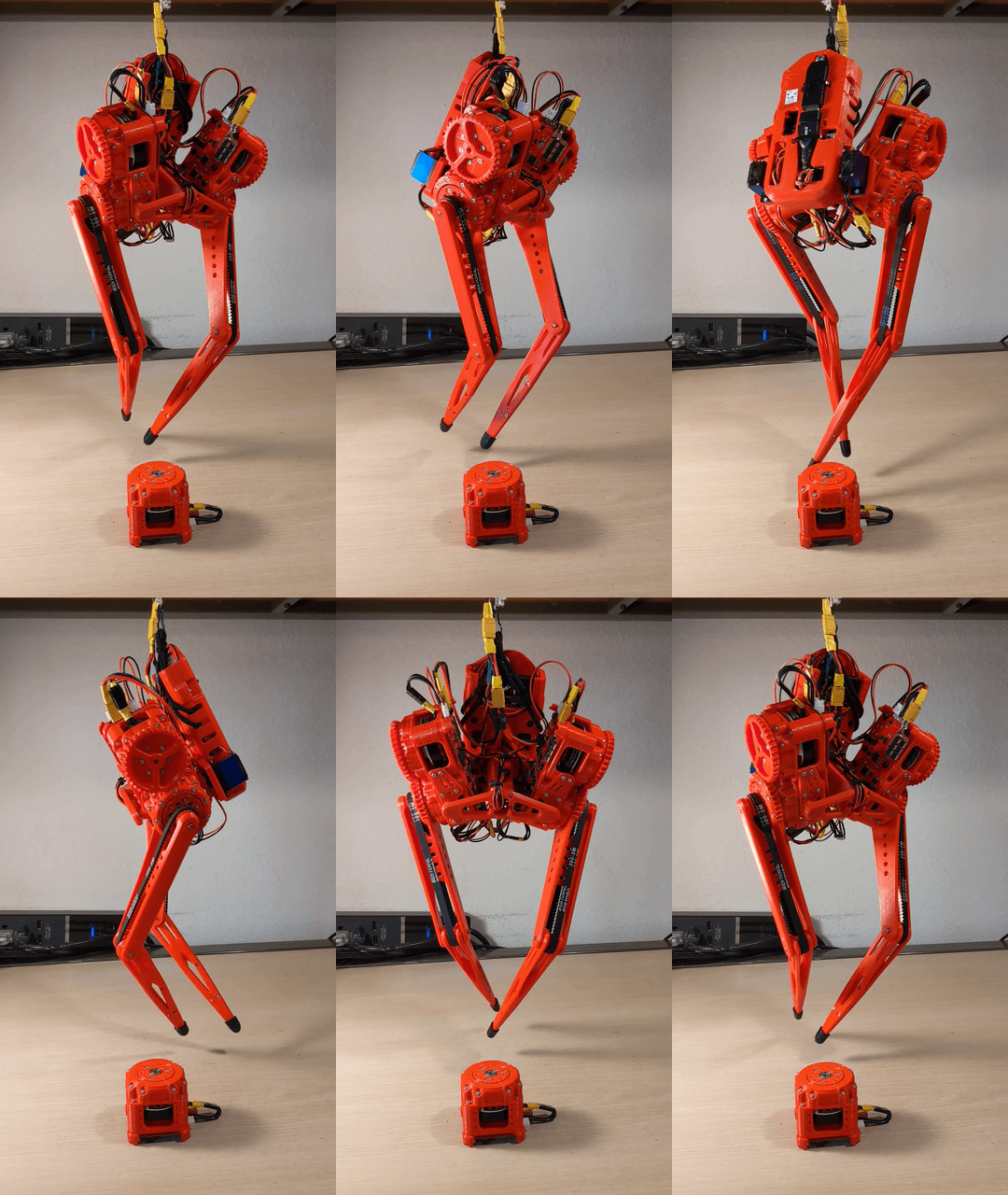
3D preview converted from github.com/DarrenLevine/TipTap at cffe367, under MIT. View the original files from GitHub (16.1 MB) (opens in a new tab)
What it can do
Written by Robotheca from the project's documents.
- Bipedal walking robot designed for semi-direct drive walking research
- Controlled through the tiptap.py library, with identical calls in simulation and on hardware
- Runs in a pybullet simulation automatically when no hardware is connected
- Hip joints driven by TipTap motors; swivel joints driven by MG92B servos
Bill of materials
This repository has no parts list Robotheca can read yet.
Build guide
The guide appears here as you scroll.
Guide by @DarrenLevine (README.md), under MIT.
Wiring and electronics
Notes written by Robotheca from the project's documents.
Main parts
- BeagleBone Blue controller board
- Four TipTap motors
- Two MG92B servos
- LM2596 buck converter set to about 7.4 V for the BeagleBone Blue
- JBtek USB to RS485 converter adapter (CH340T)
- About 24 V external power supply, such as a benchtop supply, lipo batteries, or a 24 V adapter
Connections
- LM2596 buck converter connects to the BeagleBone Blue through a 3-pin JST connector
- Power wiring uses XT30U connectors with silicone wire, per the builder's choice
- RS485 USB adapter links the robot's motors to the computer over USB