Combat Robot
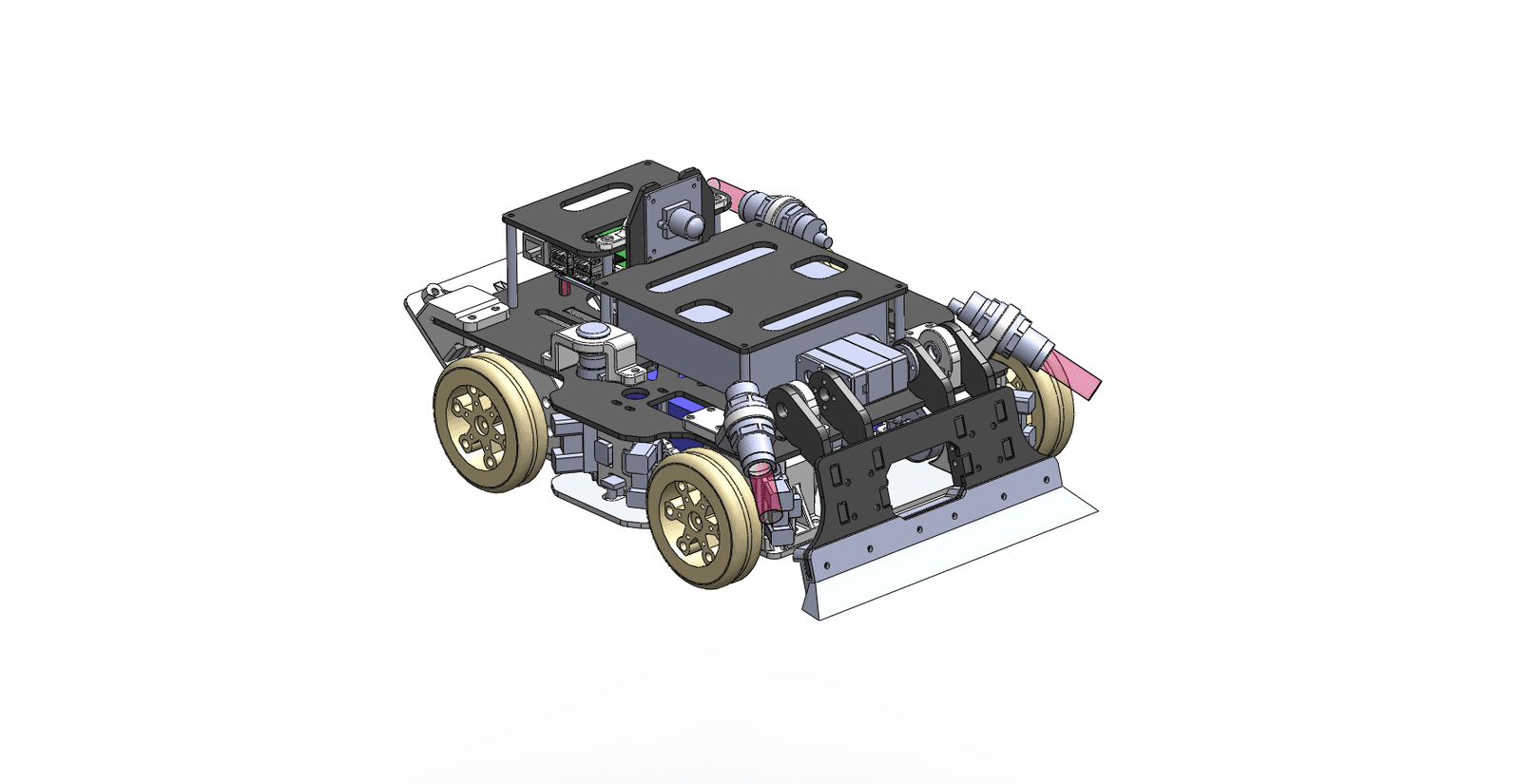
A 3.5 kg wheeled combat robot with STM32 and Raspberry Pi, designed for robot fighting competitions.
- Other
- Open source
- Competition robot
- 3D printable
Suggested by Robotheca, created by @waodfi (opens in a new tab), from github.com/waodfi/Combat-Robot (opens in a new tab). Pinned to commit 44acbb0 (opens in a new tab).
- Hardware license
- CC-BY-SA-4.0 (opens in a new tab)
- Software license
- CC-BY-SA-4.0 (opens in a new tab)
- Commercial use
- Allowed
Photo
- Power
- 24 V
- Height
- 145 mm
- Weight
- 3.5 kg
What it can do
Written by Robotheca from the project's documents.
- 3.5 kg wheeled combat robot with 4WD differential steering
- Uses a 15 kg dual-axis servo-driven shovel weapon
- Autonomous navigation using grayscale and infrared sensors
- Edge and arena detection with photoelectric switches
- Attitude control with IMU
- Raspberry Pi 5 for vision and decision-making
- STM32H743VGT5 for motion control
Bill of materials
This repository has no parts list Robotheca can read yet.
Build guide
The creator's steps, each with its instructions.
- 1Prepare materials and tools
- 2Fabricate metal and FR-4 parts
- 33D print PLA components
- 4Assemble drive motors and wheels
- 5Mount Raspberry Pi and STM32
- 6Install sensors (gray scale, infrared, photoelectric, IMU)
- 7Wire and connect electronics
- 8Assemble weapon mechanism (dual-axis servo and plow)
- 9Install battery and secure wiring
- 10Final assembly and testing
The guide appears here as you scroll.
Guide by @waodfi (README.md), under CC-BY-SA-4.0. The English translation is by Robotheca, shared under the same license.
Wiring and electronics
Notes written by Robotheca from the project's documents.
Main parts
- Raspberry Pi 5 (upper computer)
- STM32H743VGT5 (lower computer)
- JGB37-3625 24 V brushless geared motors × 4
- 15 kg dual-axis digital servo for weapon
- Grayscale sensors × 4
- Infrared distance sensors × 6 to 12
- Photoelectric switches × 3
- IMU for attitude sensing
- 24 V 12 A lithium battery pack
Connections
- Raspberry Pi 5 connected to STM32H743VGT5 via serial bus
- Motors driven by dedicated motor drivers connected to STM32
- Servo controlled directly by STM32
- Sensors wired to STM32 digital or analog inputs
- Battery supplies 24 V power to motors, servos and controllers