NanoLoong Bipedal
A 60 cm tall bipedal robot combining Pixar-style and Disney BDX designs, using brushless motors and reinforcement learning.
- Humanoid
- Open source
- Works with AI
- 3D model (URDF)
- 3D printable
Suggested by Robotheca, created by @loongOpen (opens in a new tab), from github.com/loongOpen/NanoLoong-Bipedal (opens in a new tab). Pinned to commit 446e507 (opens in a new tab).
- Hardware license
- Apache-2.0 (opens in a new tab)
- Software license
- Apache-2.0 (opens in a new tab)
- Commercial use
- Allowed
This repository contains executable files that Robotheca doesn't check. Only run them if you trust the creator.
Which files (1 file marked executable, 59 scripts, 37 programs or installers, 6 firmware images)
- LICENSE (opens in a new tab)
- OmniBotCtrl/OmniBotCtrl/sim2sim_lcm/build/CMakeFiles/3.25.0/CMakeDetermineCompilerABI_C.bin (opens in a new tab)
- OmniBotCtrl/OmniBotCtrl/sim2sim_lcm/build/CMakeFiles/3.25.0/CMakeDetermineCompilerABI_CUDA.bin (opens in a new tab)
- OmniBotCtrl/OmniBotCtrl/sim2sim_lcm/build/CMakeFiles/3.25.0/CMakeDetermineCompilerABI_CXX.bin (opens in a new tab)
- OmniBotCtrl/OmniBotCtrl/tools/clear_log.sh (opens in a new tab)
- OmniBotCtrl/OmniBotCtrl/tools/ethercat.sh (opens in a new tab)
- OmniBotCtrl/OmniBotCtrl/tools/make.sh (opens in a new tab)
- OmniBotCtrl/OmniBotCtrl/tools/run_mujoco.sh (opens in a new tab)
- OmniBotCtrl/OmniBotCtrl/tools/run_rviz.sh (opens in a new tab)
- OmniBotCtrl/OmniBotCtrl/tools/run_test.sh (opens in a new tab)
- OmniBotCtrl/OmniBotCtrl/tools/sla.sh (opens in a new tab)
- OmniBotCtrl/OmniBotCtrl/tools/update_lib.sh (opens in a new tab)
- OmniBotCtrl/OmniBotCtrl/update1.sh (opens in a new tab)
- OmniBotCtrl/OmniBotCtrl/update2.sh (opens in a new tab)
- OmniBotHmi/OCU_software/_internal/freetype.dll (opens in a new tab)
- OmniBotHmi/OCU_software/_internal/libcrypto-3.dll (opens in a new tab)
- OmniBotHmi/OCU_software/_internal/libffi-8.dll (opens in a new tab)
- OmniBotHmi/OCU_software/_internal/libjpeg-9.dll (opens in a new tab)
- OmniBotHmi/OCU_software/_internal/libmodplug-1.dll (opens in a new tab)
- OmniBotHmi/OCU_software/_internal/libogg-0.dll (opens in a new tab)
- and 83 more
Photo and 3D model
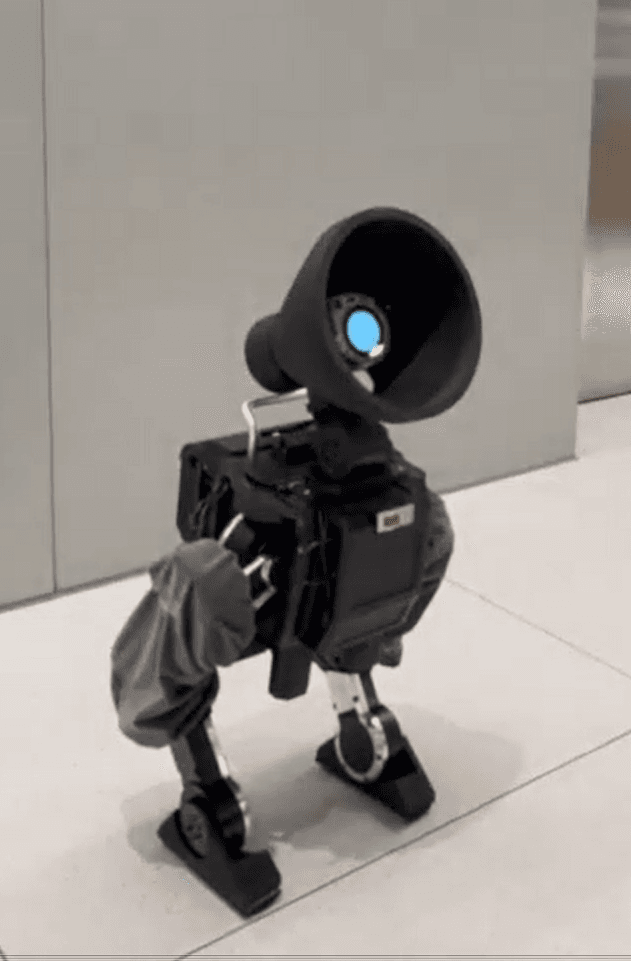
3D preview converted from github.com/loongOpen/NanoLoong-Bipedal at 446e507, under Apache-2.0. View the original files from GitHub (9.1 MB) (opens in a new tab)
- Height
- 60 cm
What it can do
Written by Robotheca from the project's documents.
- Walks on two legs using reinforcement learning policies
- Performs dynamic bipedal gaits similar to Disney BDX robot
- Supports remote control via wireless module
- Can install Xiaozhi AI module for large language model functions
- Runs reinforcement learning algorithms onboard for real-time gait control
Works with AI
Found by Robotheca in the project's files at commit 446e507, its robot.yaml and Robotheca's notes on its documents. Never guessed; Robotheca doesn't run the code.
Ships trained model files: model_jitt.pt and 9 more
In the project files: OmniBotCtrl/OmniBotCtrl/model_jitt.pt“Walks on two legs using reinforcement learning policies”
Robotheca's notes: What it can do“Can install Xiaozhi AI module for large language model functions”
Robotheca's notes: What it can do“Runs reinforcement learning algorithms onboard for real-time gait control”
Robotheca's notes: What it can do
Bill of materials
This repository has no parts list Robotheca can read yet.
Build guide
The creator's steps, each with its instructions.
- 1Review CAD design and 3D printable parts
- 2Assemble mechanical structure
- 3Install electronics and PCB
- 4Set up reinforcement learning policies
- 5Integrate AI modules (optional)
The guide appears here as you scroll.
Guide by @loongOpen (README.md), under Apache-2.0.
More guides
Wiring and electronics
Notes written by Robotheca from the project's documents.
Main parts
- Brushless motors for leg joints
- Odroid C4 as onboard computer
- ESP32-S3 development board for remote control interface
- Wireless communication module for remote operation
- Custom power distribution PCBs (omnibothub-power-one, omnibothub-power-two, omnibothub-power-four)
- Debug and core control PCBs (omnibothub-debug, omnibothub-core)
- CAN bus for motor control
- LVGL-based display for remote control unit
Connections
- Brushless motors connected via CAN bus to core control PCB
- Odroid C4 communicates with core control PCB
- ESP32-S3 remote control unit connects to display and wireless module
- Power distribution PCBs provide regulated power to motors and electronics
- Debug PCB used for development and testing
Schematics, boards and diagrams
- OmniBotHub/PCB/omnibotdebug.PcbDocAltium
- OmniBotHub/PCB/omnibothub-core.PcbDocAltium
- OmniBotHub/PCB/omnibothub-debug.PcbDocAltium
- OmniBotHub/PCB/omnibothub-debug.SchDocAltium
- OmniBotHub/PCB/omnibothub-extcan.PcbDocAltium
- OmniBotHub/PCB/omnibothub-power-four.PcbDocAltium
- OmniBotHub/PCB/omnibothub-power-one-usb.PcbDocAltium
- OmniBotHub/PCB/omnibothub-power-one-usb.SchDocAltium
- OmniBotHub/PCB/omnibothub-power-one.PcbDocAltium
- OmniBotHub/PCB/omnibothub-power-one.SchDocAltium
- OmniBotHub/PCB/omnibothub-power-two.PcbDocAltium
- OmniBotHub/PCB/omnibothub-power-two.SchDocAltium
- OmniBotTele/PCB/OmniBotRemote.PcbDocAltium
- OmniBotTele/PCB/OmniBotRemote.SchDocAltium
- OmniBotTele/PCB/usb_convert.PcbDocAltium